 Skip to main content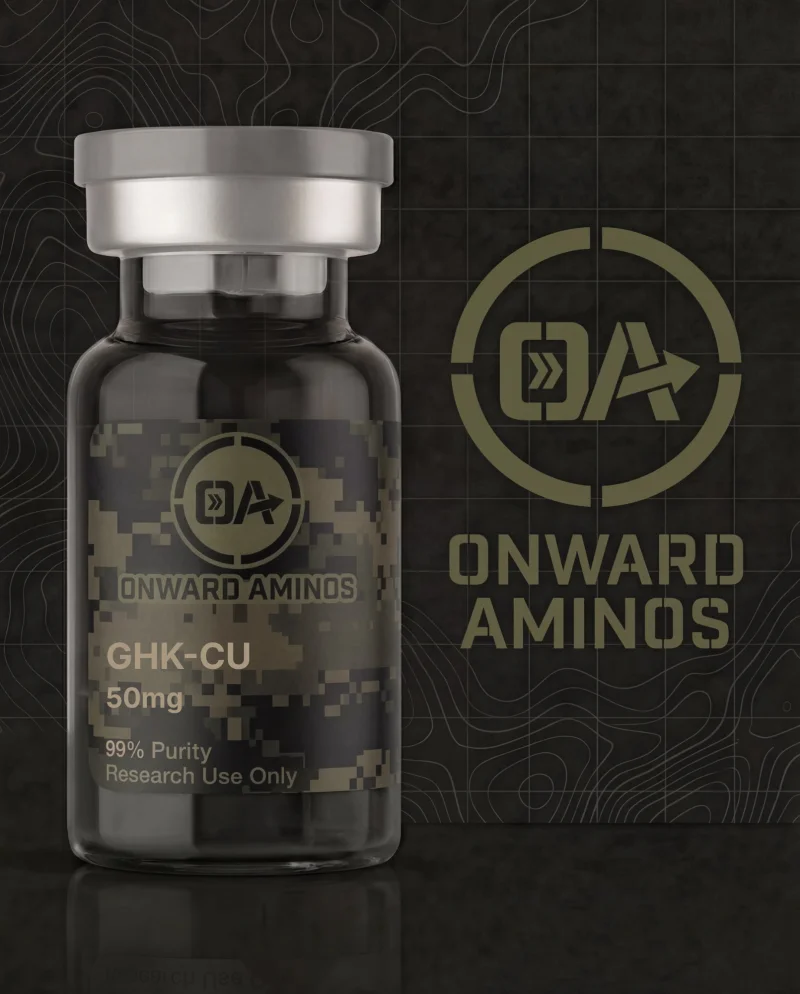
GHK-Cu
Copper-Binding Tripeptide
MISSION CRITICAL: For in vitro laboratory research only. Not for human or veterinary use. Not evaluated by the FDA. Must be 21+.
SPECIFICATIONS
COMPOUND INTEL
REF #OA-447-GHKCUMOLECULAR PROFILE
GHK-Cu (Copper Peptide Complex) is a tripeptide-copper complex consisting of glycine, histidine, and lysine bound to a copper ion. With the molecular formula C₁₄H₂₂CuN₆O₄ and a molecular weight of 404.8 g/mol (CAS: 49557-75-7), GHK-Cu is a naturally occurring copper carrier found in human plasma, saliva, and urine.
Gly-His-LysMECHANISM OF ACTION
GHK-Cu functions as a copper carrier, delivering copper ions to cells with high binding affinity and specificity.
Research indicates GHK-Cu influences transforming growth factor-beta signaling pathways in fibroblast cultures.
GHK-Cu exhibits copper-dependent superoxide dismutase-like activity in biochemical assays.
TECHNICAL DATA
- CAS No.
- 49557-75-7
- Mol. Formula
- C14H24N6O4 (free tripeptide)
- Mol. Weight
- 340.38 g/mol (free tripeptide); ~403 g/mol (Cu complex)
- Purity
- 99%+ (HPLC)
- Form
- Lyophilized Powder
- Storage
- −20°C · Lyophilized