GH secretagogue peptides are synthetic compounds that activate either growth hormone-releasing hormone receptors (GHRH-R) or ghrelin receptors (GHS-R1a) on pituitary somatotrophs to stimulate growth hormone release. Two mechanistically distinct receptor classes define the category. GHRH analogs — CJC-1295, Sermorelin, Tesamorelin — activate GHRH receptors through Gs-protein coupling that stimulates adenylate cyclase and elevates intracellular cAMP, driving growth hormone synthesis and secretion. GH secretagogues like Ipamorelin work through a separate axis: ghrelin receptor (GHS-R1a) activation triggers phospholipase C signaling, mobilizing intracellular calcium through a pathway mechanistically distinct from cAMP-driven secretion. A research lab investigating pituitary function would use GHRH analogs and ghrelin receptor agonists for different experimental questions — they are not interchangeable. Published studies characterize both receptor classes in pituitary cell cultures and animal models. These peptides serve as pharmacological tools for studying endocrine signaling mechanisms, receptor pharmacology, and growth hormone regulation in preclinical research contexts.
How do CJC-1295 variants differ?
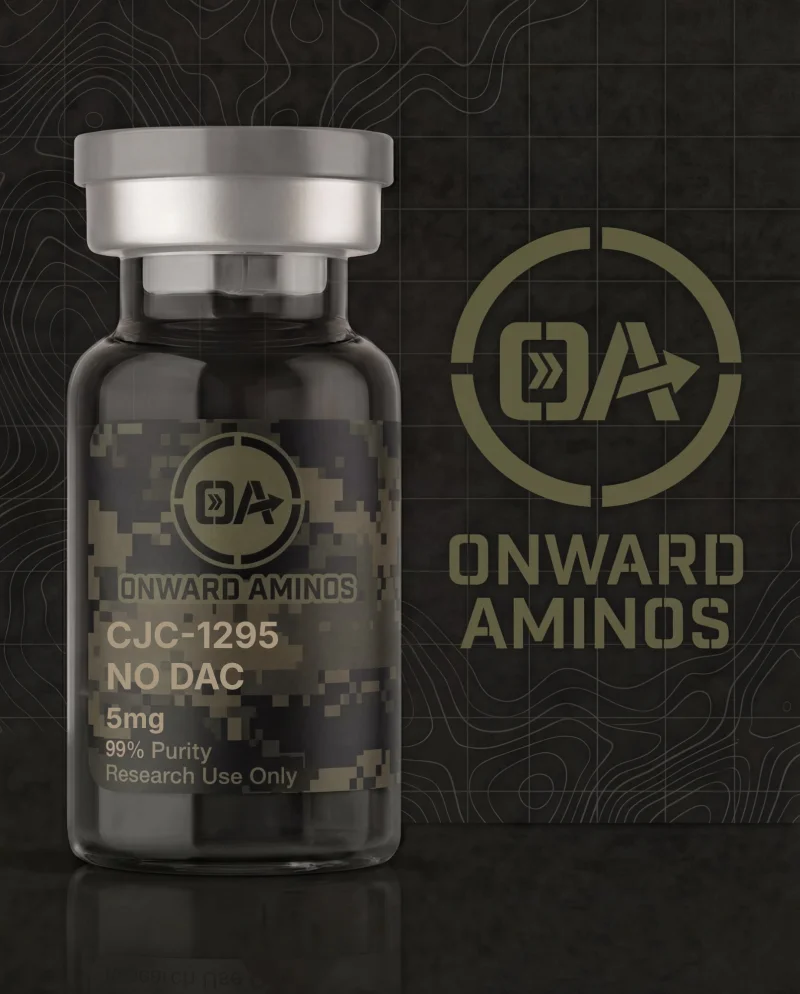
CJC-1295 exists in two pharmacologically distinct forms sharing the same core receptor pharmacology but diverging substantially in pharmacokinetics. CJC-1295 without DAC (Drug Affinity Complex), also called Modified GRF(1-29), is a 29-amino acid GHRH analog with substitutions at positions 2, 8, 15, 16, 23, 24, and 28 that introduce metabolic stability compared to native GHRH. Published studies document that these sequence substitutions extend half-life significantly beyond native GHRH, which degrades rapidly under physiological conditions. CJC-1295 with DAC adds an albumin-binding moiety to the same peptide sequence, creating a circulating depot that releases active peptide gradually. Published pharmacokinetic characterization shows that the DAC modification produces longer terminal half-life but slower onset compared to the non-DAC form. Both variants activate GHRH receptors through the same Gs-protein mechanism — the difference is duration and release kinetics, not receptor pharmacology. Research protocol selection between the two forms depends on whether the experimental design requires short-window pulsatile activation or sustained GHRH receptor engagement. Both require HPLC purity and mass spectrometry identity documentation before experimental deployment.
What is the molecular structure of Ipamorelin?
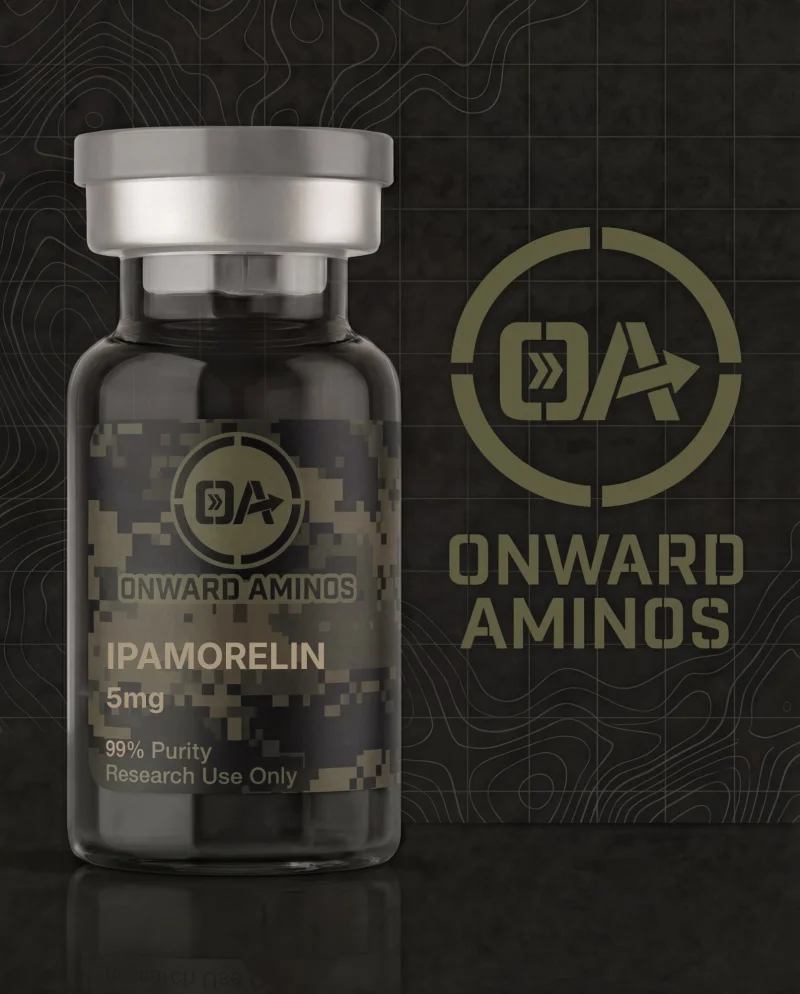
Ipamorelin is a synthetic pentapeptide with the sequence Aib-His-D-2-Nal-D-Phe-Lys-NH2, where Aib is aminoisobutyric acid and D-2-Nal is D-2-naphthylalanine. Published research confirms the molecular formula as C₃₈H₄₉N₉O₅ with molecular weight 711.9 g/mol. Two D-amino acids at positions 2-Nal and Phe introduce proteolytic resistance — this is the primary stability strategy for the pentapeptide scaffold. C-terminal amidation provides additional stability against exopeptidase cleavage. Ipamorelin's defining pharmacological property is selectivity: published binding studies demonstrate high-affinity activation of the ghrelin receptor (GHS-R1a) with minimal off-target activity at other pituitary hormone receptor pathways including ACTH, prolactin, and cortisol (PMID: 9849822). That selectivity distinguishes Ipamorelin from earlier non-selective GHRP compounds and makes it a cleaner tool for receptor-specific research designs. The receptor binding mode differs from native ghrelin at the structural level — Ipamorelin is a small molecule mimic, not a ghrelin fragment. Published research characterizes Ipamorelin as the reference compound for selective ghrelin receptor pharmacology investigation in the GHS class.
How does Sermorelin differ from native GHRH?
Sermorelin is a synthetic 29-amino acid peptide representing the biologically active N-terminal fragment of human GHRH. The sequence is GHRH(1-29): Tyr-Ala-Asp-Ala-Ile-Phe-Thr-Asn-Ser-Tyr-Arg-Lys-Val-Leu-Gly-Gln-Leu-Ser-Ala-Arg-Lys-Leu-Leu-Gln-Asp-Ile-Met-Ser-Arg-NH2, acetate salt form with molecular weight 3357.9 g/mol. The structural relationship to native GHRH(1-44) is direct: Sermorelin is the first 29 residues of the full-length peptide. Published structure-activity studies demonstrate that residues beyond position 29 in native GHRH contribute primarily to metabolic stability rather than receptor binding or activation efficacy — the biological activity resides in the N-terminal fragment. Sermorelin retains the native sequence without the stability-enhancing substitutions found in analogs like CJC-1295. As a result, it has a shorter effective half-life in tissue environments but maintains exact native receptor pharmacology. Published receptor binding studies confirm that Sermorelin activates GHRH receptors through the same Gs-coupled cAMP mechanism as full-length GHRH, with equivalent potency in pituitary cell culture assays. The native sequence fidelity makes Sermorelin a useful reference compound for GHRH receptor research where analog modifications are a confounding variable.
What modifications does Tesamorelin contain?
Tesamorelin is a GHRH analog built from the full GHRH(1-44) sequence with a trans-3-hexenoyl group attached at the N-terminal tyrosine. Published research confirms the 44-amino acid sequence with molecular weight 5135.9 g/mol. The hexenoyl modification strategy differs from CJC-1295's sequence substitution approach — instead of changing the amino acid composition, Tesamorelin appends a lipophilic moiety to the native sequence that reduces renal clearance and proteolytic degradation. That lipophilicity extends half-life while preserving the complete native GHRH(1-44) sequence and its receptor contact surfaces. Published pharmacokinetic studies document that the modification achieves extended half-life through reduced clearance rather than altered receptor pharmacology — Tesamorelin activates GHRH receptors with similar potency to native GHRH in binding and cAMP assays. The full-length GHRH sequence means Tesamorelin engages the receptor over a longer contact surface than the CJC-1295 truncated variants, which has implications for research designs examining receptor contact geometry or full-length GHRH receptor pharmacology. Research applications use Tesamorelin for sustained GHRH receptor activation studies.
How Do GH Secretagogue Peptides Compare?
Feature
CJC-1295 NO DAC (Mod GRF 1-29)
CJC-1295 DAC
Ipamorelin
Sermorelin
Tesamorelin
Amino Acids
29
29
5
29
44
Molecular Weight
3367.9 Da
3647.4 Da
711.9 Da
3357.9 Da
5135.9 Da
CAS Number
446036-97-1
863288-34-0
170851-70-4
86168-78-7
218949-48-5
Receptor
GHRH-R
GHRH-R
GHS-R1a
GHRH-R
GHRH-R
Selectivity
GHRH selective
GHRH selective
GH selective
GHRH selective
GHRH selective
Key Modification
Sequence substitutions
DAC albumin binding
D-amino acids
Native sequence
Hexenoyl group
Mechanism
cAMP/PKA
cAMP/PKA
PLC/Ca2+
cAMP/PKA
cAMP/PKA
Primary PMID
15775957
16452336
10698741
8421207
19928588
FAQ
What concentration is used for GHRH receptor research?
Published in vitro studies typically use 1-100 nM concentrations for GHRH receptor activation in pituitary cell cultures. Higher concentrations (100-1000 nM) may be used for receptor internalization or binding studies. Verify receptor expression in your cell model before finalizing protocol concentrations.
Do GH secretagogues require GHRH for activity?
Published research demonstrates that GH secretagogues including Ipamorelin stimulate GH release in the absence of GHRH, though synergistic effects may occur when the two receptor classes are co-stimulated in the same model. Ghrelin receptor agonists act through a distinct mechanism from GHRH analogs — the pathways are parallel, not dependent.
What cell lines express GHRH receptors?
Published studies use primary pituitary cells, AtT-20 pituitary tumor cells, and HEK293 cells transfected with GHRH receptors. Verify receptor expression through binding assays or qPCR before experimental use.
How stable are these peptides in culture media?
Peptide stability varies by structure and media composition. Published studies typically use fresh preparations or include protease inhibitors. CJC-1295 analogs with sequence modifications show enhanced stability compared to native sequences in media environments.
Can these peptides be used in combination?
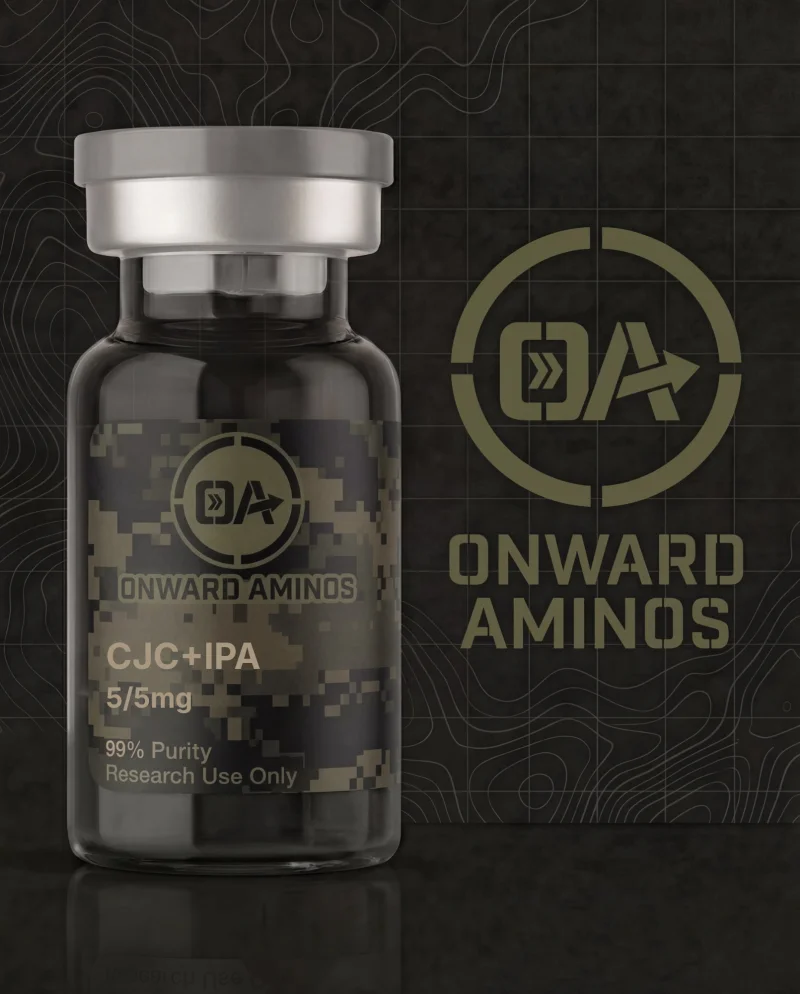
Published research demonstrates that GH secretagogues and GHRH analogs can be combined, with potential synergistic effects on GH release through the two distinct receptor mechanisms. Design experiments with appropriate controls to isolate individual compound effects before interpreting combination data.
Research Use Only: All compounds sold by Onward Aminos are intended exclusively for laboratory research. Not for human or animal consumption. These products are not drugs, supplements, or food. Statements have not been evaluated by the FDA. Must be 21+ to purchase.
Cited literature
References
Primary literature and public databases referenced above. Each link resolves on the publisher or database of record.
 Skip to main content